

AI Voice Agents in Healthcare, Agriculture, Finance, and Education
Healthcare: Improving Continuity of Care
Effectiveness of the system of health care delivery at the last mile depends heavily on the element of continuity—ensuring patients complete a course of treatment, attend follow-ups, manage chronic conditions between sessions, and receive care prior to emergencies occurring. This element of maintaining a continuous connection is very difficult to accomplish using a conventional system of care delivery because of the need for constant communication.
AI voice agents revolutionize the continuity of care through the automation of the most common aspects of interaction and the release of clinical staff to deal with complex cases that need medical judgment.
Appointment reminders that actually reach people: When you send text messages to the literate population that utilizes smartphones, it is possible to reach people. When you call individuals who have access to any type of phone, reminders delivered in spoken language ensure that people understand the reminder. The system helps individuals understand the reminder, gets questions about things like preparation requirements, or reschedules the appointment if the time is not convenient—all without human involvement.
Medication adherence support: There is a correlation between the effectiveness of medication and how well it is taken. The amount and the right time for consumption are important. Voice agents can be used to remind users to take medication and make them understand that the right amount and time of consumption are important. They can also identify when users are experiencing any side effects and detect patterns of non-adherence of users to medication. This could be important in the management of chronic conditions like diabetes and high blood pressure.
Post-discharge monitoring: The time immediately following discharge from the hospital or completion of any treatment procedure is where the risk of complications is highest, and the patients are no longer under close observation. Voice assistants make it easier to conduct organized follow-ups with patients, checking in on how they feel, the pain level, and how their recovery is going. In event of the patient describing any suspicious symptoms, clinical staff are dispatched right away.
Outreach for preventive care: The effort to get people to come in for screenings, vaccinations, or completion of procedures is one that requires relentless and persuasive communication. A voice campaign will explain benefits in culturally sensitive methods, respond to common concerns directly, and walk people through the process of scheduling-appointed participation rates impossible from passive poster or single SMS blasts.
Triage for Appropriate Levels of Care: Oftentimes, not all symptoms require emergency room visits or scheduling of appointments with specialists. Voice agents can indeed perform some front-end symptom sorting before sending users to levels of care that are appropriate and make greater use of resources efficiently.
Those healthcare organizations that have deployed voice AI have experienced a 30-40% decrease in no-show rates for appointments, a tangible improvement in treatment compliance, reduced hospital readmission, and substantially more able handling of patient demand without adding any new clinical staff. The technology does not replace healthcare workers, but rather multiplies their capabilities and efficiencies.
Agriculture: Empowering Farmers with Timely Information
Success or failure in agriculture depends on the numerous decisions made at critical points: when to sow, how to control pests, when to reap, where to sell, among others. Conventionally, smallholding farmers have relied either on extension workers whose network is restricted in reach or go-betweens who, since they are in the business themselves, advise others in their own self-interest.
According to them, AI Voice creates a bypass for farmers in information-need and in the knowledge of agriculture, conveyed in a local language at the time of decision-making.
Weather and climate advisories on rainfall, temperature, and extreme weather events help farmers plan better planting schedules, protecting crops from undue weather and conserving available water for irrigation. Compared to text messages, voice calls are more efficient in reaching farmers.
messages, as they enable farmers to understand the weather forecasts and what they mean to them.
Pest and disease management: For example, when unusual symptoms are noticed on the crops, the farmers can be provided timely guidance so that the problems are not escalated to the point of crop damage. The voice agents can be enabled to ask questions to the farmers, or determine the problem from the description provided to them. In addition, the agents can
recommendations—connecting farmers to expert knowledge without waiting days for extension agents to visit.
Market price information: Exploitation of the farmer happens when information asymmetry arises, and the farmer is unaware of the market price and argues that the price offered is low. However, when the farmer receives daily market price information in different dialects, they can negotiate and plan at the optimal hour and location.
Scheme eligibility and application assistance: Governments have been providing several subsidies and insurances through agricultural department programs, which many farmers eligible for these programs are unaware of or are unable to apply for due to the intricacy involved in the process. This can be performed through voice agents as well, resulting in a larger number of farmers availing these facilities.
Due to the communication problems to reach the farmers, it is not being adopted and spread as it is supposed to be. Seasonal best practice guidance about specific crops can be provided using voice-based services, and instant answers to implementation questions.
Among them is freedom in making one’s decisions, in freedom as from a guardian.
This method is more useful to women farmers or disadvantaged agricultural communities with fewer years of schooling, mobility to attend training programs, and access to extension services. Voice equalizes the playing field by providing access to expertise for people with basic telephone access.
Finance: Building Trust in Microfinance
Financial inclusion strategies seek to extend access to traditional financial services to the excluded segments in society. Key to the success of these initiatives is the element of trust; this is both in the form of institutional trust in customers to repay loans, and client trust in institutions being fair to them.
Voice interaction facilitates such reciprocal trust more effectively than text-based and in-person interaction models.
Empathetic Repayment Reminders: The difference between “Payment due tomorrow” and “Hello [name], this is a reminder that your loan repayment of [amount] is due tomorrow. You can pay at [location] or through mobile money. Do you have any questions?” cannot be overstated in its implications in terms of the significance of clarity in addition to receptiveness as opposed to avoidance.
Financial literacy education: Understanding concepts such as interest rates, loan conditions, benefits of saving, and the value of insurance requires educational information that is explanatory rather than perplexing. Voice agents can
conversations about financial education, checking comprehension through questioning, and using examples related to the individual’s life, creating ability as well as access.
E.g., in microfinance applications, the usual requirement involves subprocesses where people are asked to provide information that may be difficult for people with poor literacy skills to provide in written form, and voice assistance in such processes can be quite useful in this regard.
Query resolution and customer service: For instance, if a customer wants to inquire about the balance, transactions, and other details regarding their accounts, lack of response plays a major role in creating mistrust, which leads to their default. Immediate responses through voice services can help sustain the relationship.
Default prevention through early intervention: With the help of Voice AI systems, the possibility of default can be reduced as they identify early warning signs such as missed payments and reduced activity levels. Hence, they can proactively contact the clients. This is not a punishment mechanism but a preventive measure.
The microfinance institutions using voice AI technologies have shown improved results, including 30%+ improvement in on-time repayment, increased client satisfaction, reduced default levels, and higher portfolio sizes as a result of word-of-mouth publicity generated regarding their friendly communication style.
Education: Increasing Enrollment and Retention
Educational programs at the last mile—whether formal schools, vocational training, or literacy initiatives—face persistent challenges with enrollment, attendance, and completion. Parents may not fully understand program benefits. Students encounter obstacles that derail participation. Information about opportunities never reaches communities effectively.
Voice-based outreach addresses these barriers through accessible, persistent communication that keeps families engaged.
Enrollment campaigns: Getting eligible children enrolled in schools or adults into literacy programs requires awareness of opportunities, understanding of benefits, and guidance through enrollment processes. Voice campaigns can reach parents directly, answer questions in their language, address concerns about costs or logistics, and guide families through registration—achieving dramatically higher enrollment than passive advertising.
Career guidance and opportunity awareness: Information about scholarships, vocational opportunities, or higher education options often fails to reach last-mile communities where social networks don’t connect to these pathways. Voice-based information campaigns can systematica
Attendance reminders and motivation: Daily or weekly voice messages to parents and students can remind about classes, encourage attendance, celebrate progress, and provide motivational support. This consistent engagement helps maintain momentum, particularly for adult learners balancing education with work and family responsibilities.
Parent engagement: Student success correlates strongly with family support, yet many last-mile parents feel disconnected from educational institutions due to their own low literacy or lack of confidence interacting with teachers. Voice-based updates about student progress, upcoming events, and ways parents can support learning create accessible connection points that build family involvement.
Dropout prevention: Students at risk of dropping out often show early warning signs—declining attendance, falling performance, financial stress. Voice AI can detect these patterns and trigger interventions—counseling outreach, financial assistance information, or flexible scheduling options—before students actually leave programs.
lly reach students who otherwise wouldn’t know opportunities exist, particularly benefiting first-generation learners.
Educational programs implementing voice engagement see 20-35% improvements in attendance rates, significant reductions in dropout, higher parent satisfaction and involvement, and better student outcomes as consistent engagement helps learners persist through challenges.
Why Voice Works Across All Sectors
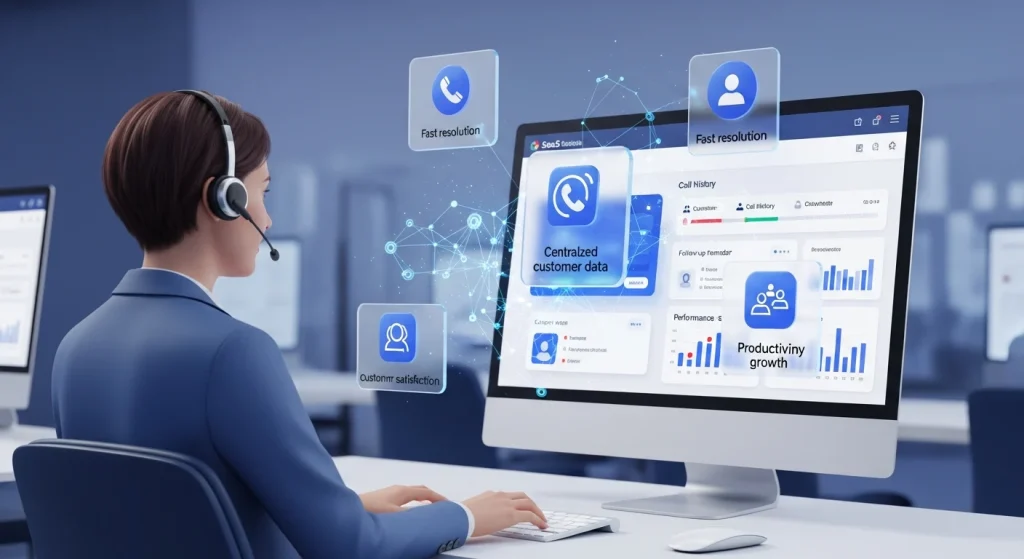
While each sector has domain-specific needs—clinical protocols in healthcare, crop information in agriculture, financial terms in microfinance—the underlying communication challenges prove remarkably similar across contexts.
Every sector depends on understanding beneficiaries must comprehend what they’re being asked to do, why it matters, and how to do it correctly. Voice enables rich explanation, immediate clarification, and confirmation of comprehension in ways text cannot match.
Every sector requires trust people must believe organizations have their best interests in mind and will treat them fairly. Voice carries empathy, respect, and personalization that build emotional connection and trustworthiness.
Every sector needs timely action information only creates impact when it arrives at moments people can act on it. Voice enables proactive outreach that reaches people exactly when decisions must be made or behaviors should occur.
The universality of voice as an interface—working regardless of literacy, digital access, or formal education—makes it uniquely suited for last-mile communication across all sectors. Organizations aren’t choosing voice because it works for their specific domain; they’re choosing voice because it works for their specific populations in ways that other interfaces systematically fail.