
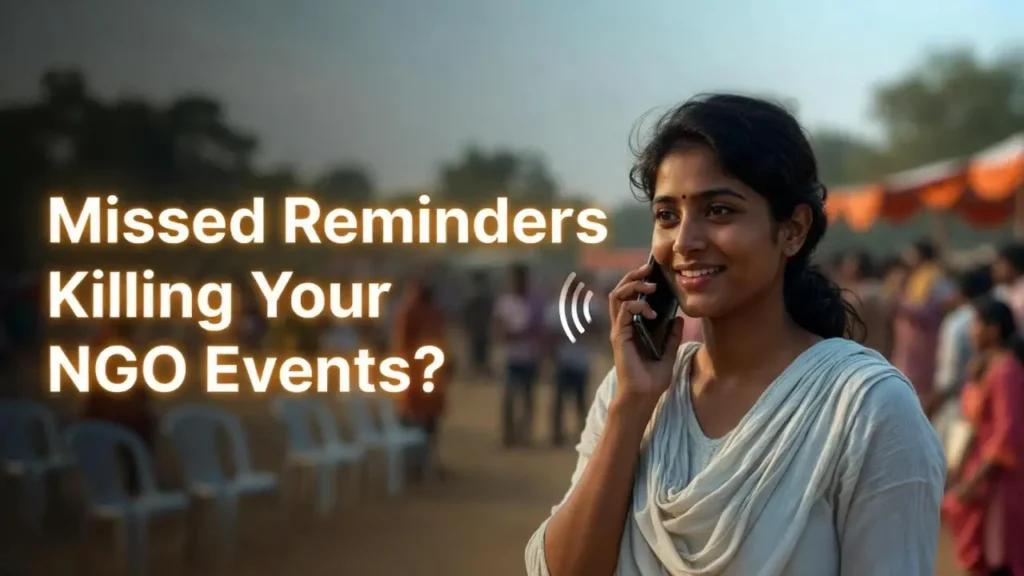
The Tragedy of Empty Seats: Why NGO Events Fail (And How AI Voicebots Fix the "No-Show" Epidemic)
Key Takeaways Before You Dive In:
The Core Problem: Lack of attendance at free community events is never due to lack of interest. It is almost entirely due to the fact that marginalized and busy people just forget the date.
The High Cost of No-Shows: Every empty seat is the result of wasted donor funds, expired medicine, severely demoralized volunteers, and the loss of an opportunity to change a life.
The Smart Solution: Swapping easily ignored SMS messages with automated AI Voice Reminders is the smart solution to ensure a guaranteed increase of 30% to 40% in actual event attendance without exhausting your human resources.
Imagine the huge effort it takes to organize a community event for a Non-Governmental Organization (NGO).
Let’s say you are part of an NGO planning to organize a free mega health camp in an underprivileged neighborhood. You have been planning this event for the last three months. You have worked relentlessly to pitch corporate CSR boards to raise funds. You have worked with local hospitals to bring in doctors. You have bought thousands of dollars’ worth of medicine. You have mobilized fifty passionate volunteers to manage the crowd.
Your grassroots marketing campaign worked flawlessly. Two weeks prior to the event, you effectively registered 200 local citizens who desperately need medical attention.
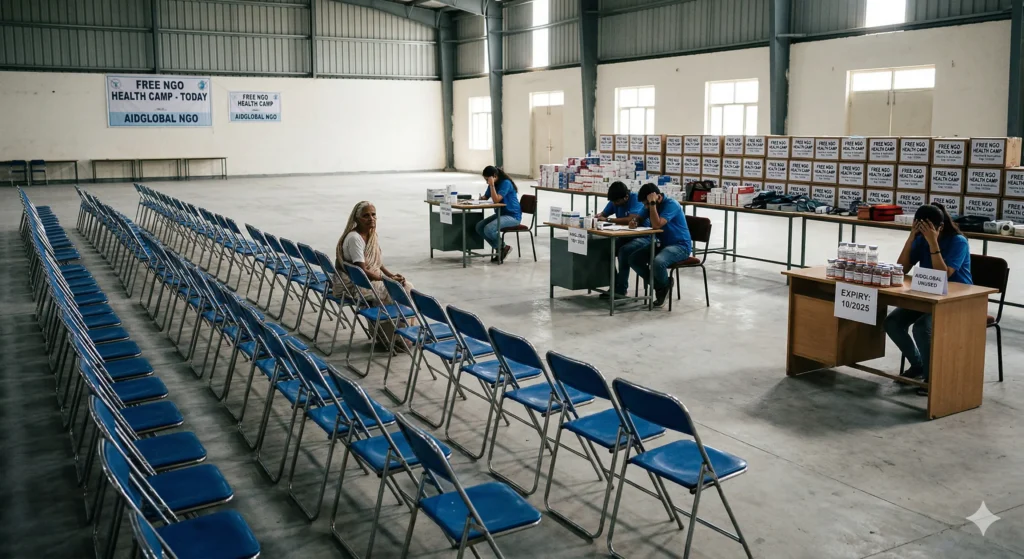
The day of the event arrives, and the venue looks beautiful. The doctors are seated behind their desks, ready to begin the day with their stethoscopes at the ready. The volunteers are ready and eager to begin their day of service.
But as the doors open, the day drags by with only the passing of time. Out of the 200 people registered, only 47 people show up to the event.
This is not the stuff of a nightmare, but the harsh and very common reality that thousands of non-profits face all over the world. When the attendance of an event plummets as drastically as this, the first, and most cynical, reaction from the world is that the people simply did not care, or that they did not value the free service being offered.
However, vast amounts of data from the social sector have shown a much more mundane, and entirely solvable, truth: people simply forgot.
In this comprehensive guide, we shall seek to examine the catastrophic consequences, both psychologically and financially, of the “No-Show” epidemic, why SMS reminders are a broken model, and how visionary social organizations are leveraging AI Voicebots to ensure sold-out crowds and maximize social ROI.
The Psychology of the No-Show: The Memory Gap
To fix the attendance crisis, we need to first understand the people we are trying to fix.
Marginalized sections of society, daily wage workers with busy lives, and overburdened parents are living in a state of survival. They don’t have digital Google calendars or apps to manage their time. If they had signed up to attend a free health camp or skill development program two or three weeks ago, they have forgotten about it in the midst of the daily struggle and chaos of their lives.
They are not forgetting the event because they are unmotivated or evil. They are forgetting the event because they are human. They need the free health camp. They need the free health camp today. They just forgot because no one is effectively reminding them that the event is today. So they are going to work today.
If the problem is really just a “Memory Gap,” the solution is obvious. You need to remind them. The problem is that implementing this obvious solution is where traditional NGO operations completely fail.
The Devastating Cost of an Empty Seat
In the corporate world, if a customer does not turn up for a webinar, it is simply a lost lead. However, in the social sector, if a seat remains empty, it is a tragedy. The ripple effects of a poor attendance rate are catastrophic and occur on four different levels:
A. The Wasted Donor ROI
If you are running an NGO, you are answerable to your donors. If a corporate CSR fund gives you money to conduct a health camp, they expect to see metrics from your event. They expect to see how many lives were touched by your event. If you organize an event for 500 people and only 100 turn up, your “Cost Per Impact” goes through the roof. Your donors realize how inefficiently they are being used, and how this inefficient use directly threatens your ability to secure future funding from them.
B. The Expiration of Physical Resources
Unlike an information-based event, physical events have physical resources. If you have ordered hot meals for 200 people and only have 50 people show up, you have wasted food. If you have ordered medicine or vaccines with a short expiration date, they have gone to waste.
C. Volunteer Demoralization
Volunteers volunteer because they have a deep and empathetic desire to make a physical difference in this world. They spend their precious weekends working for others. If they have to stand around an empty room for six hours because no one showed up, they will be demoralized. If your volunteers feel like they have wasted their precious time, they will not be there for your next campaign.
D. The Human Tragedy
Most importantly, every empty seat means a person who truly needs critical medical help, educational help, or physical support, but blew their golden opportunity to get it because of a communication problem.
The Flaw in Traditional Reminders: Why Texts and Manual Calls Fail
In the past, the “memory gap” has been addressed by NGOs in two ways, which are fundamentally wrong:
The SMS Dilemma
If an NGO wants to send reminders about an event to 500 people, the first approach is to send them all an SMS or WhatsApp message. While it’s cheap, it’s not effective.
In most communities, people don’t all have the same level of literacy. More importantly, people don’t pay attention to automated messages, which are often ignored, marked as “read,” or lost in the deluge of other messages, offers, and jokes they receive. A message sent via SMS simply doesn’t convey the same level of human need or urgency. People can simply ignore messages via SMS.
The Cruelty of Manual Calling
When an NGO realizes the futility of the SMS approach, they go to the other extreme: they start a project involving manual calling, in which they sit a bunch of volunteers in a hot room the day before an event, asking them to call 500 people on the phone.
When you take a bunch of passionate people who signed up to change the world, you are essentially destroying them as volunteers when you make them auto-dialers.
The Smart Fix: Deploying AI Voice Reminders
To bridge this communication gap, forward-thinking organizations are adopting “Tech for Good” with Conversational AI Voice Reminders.
Dheeraj Mehta, Founder, Archiz Solutions, has recently spoken about how this technology is completely transforming community engagement in the non-profit sector. No longer do organizations have to rely upon text messages that are likely to be ignored, or labor-intensive human interventions.
This is precisely how an automated AI reminder process works:
Step 1: Effortless Database Integration
The non-profit organization simply has to upload their list of participants’ registrations (in the form of an Excel sheet or CRM) into the AI system. They simply have to input the event details, including date, time, and venue.
Step 2: Automated, Localized Calling
Twenty-four hours prior to the event, the AI will automatically dial every single one of those participants simultaneously. The best part? These AI Voicebots don’t sound like robots working for some corporation. They have been pre-programmed to speak in the dialect or regional language of their choice, whether Hindi, Marathi, Tamil, and more.
Step 3: Interactive Confirmation
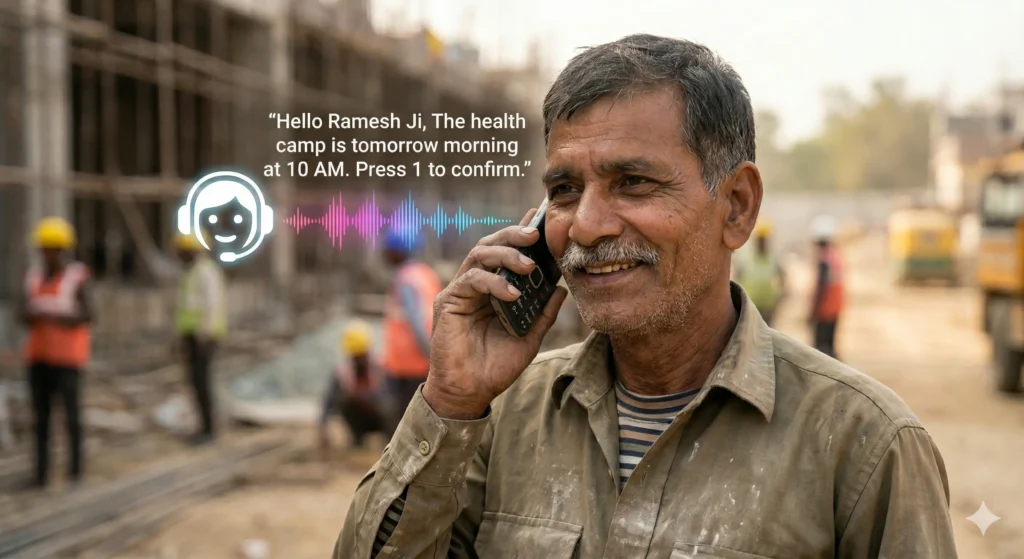
The bot sends a greeting to the participant, creating an intimate and local interaction. The participant is reminded of the venue and the time. The bot then asks the participant to give an interactive confirmation: “Hello Ramesh ji, your free health camp is tomorrow at 10 AM at the community center. Please press 1 to confirm you are coming.”
People may ignore text messages, but they are programmed to answer phone calls.
The Measurable Impact: Maximizing Social ROI
The moment an NGO switches from using text blasts to using AI Voice Reminders, the social and operational implications are immediate.
30% to 40% Higher Attendance: NGOs using this form of automated and localized voice communications have consistently shown an enormous increase in actual attendee turnout. By completely eliminating the “memory gap” through a phone call, you are guaranteed to have a packed house.
Zero Wasted Resources: By accurately determining the actual confirmations (Press 1) the day before, you can now accurately scale back the amount of food and medical supplies, thus ensuring zero wastage of precious donor resources.
Reclaiming Volunteer Energy: By freeing up the robotic and tedious process of dialing numbers from human volunteers, NGOs can now give their precious volunteer energy back to them. Volunteers can now finally take a break from the phones and devote 100% of their energy to actual on-the-ground volunteer efforts.
Conclusion: Stop Letting Forgotten Dates Limit Your Impact
The mission of an NGO is simply too important to allow a simple administrative hurdle to get in the way.
If you are pouring your heart, soul, and donor funding into events in the community, you need to make sure the people are showing up to receive the help you are providing. You cannot solve the problem of low attendance in the 21st century with a simple SMS alert or with the exhaustion of manual labor.
It is time to take the social sector out of the dark ages of communication and into the present with AI Voice Reminders, so you can save your volunteers from burnout, get the greatest ROI on donor funding, and ensure every single person who needs your help is standing at the door waiting when the event begins.