
AI Voice in Healthcare: Solving the Communication Bottleneck at Scale
The healthcare industry is under increasing pressure from the growing number of patients and a lack of staff. But there is another, more insidious problem: communication breakdown. AI voice in the healthcare industry provides a tested solution to this pressing issue, allowing healthcare facilities to manage patient communication on a large scale without sacrificing the quality of care.
Patients wait for calls that never arrive. Families have trouble getting information. Healthcare professionals spend their time answering the same questions over and over when they could be caring for patients. This guide will help you understand AI voice in the healthcare industry.
Why Healthcare Communication Is Breaking
Trust is a crucial component of the healthcare industry, and trust is created through timely communication. Yet, automation of communication in the healthcare industry is still limited. Each healthcare system is involved in appointment scheduling, follow-up calls, status updates, medication reminders, and patient reassurance on a daily basis. The amount of patient communication that AI requires has risen exponentially over the past decade.
The Daily Communication Overload
Most healthcare centers are still relying on human availability, fixed working hours, and limited front desk capacity for healthcare call automation. When the volume rises, the response time is slower. An average mid-sized hospital gets more than 100 calls between 8 AM and 10 AM. AI voice agents for healthcare can handle this volume without any delay or missed calls.
The Real Cost of Missed Calls
Patients may forget medical information, but they do not forget silence. When patients contact healthcare facilities, they are usually concerned about their health, confused about what to do next, or looking for reassurance. Healthcare Voice AI resolves these concerns right away, alleviating worries and gaining their trust. In today’s healthcare environment, the quality of communication has a direct effect on patient satisfaction ratings.
Why Patients Remember Poor Communication
Even with the best medical care, patients will not be satisfied if the communication is not good. Patients rate the customer service experience of healthcare AI compared to other industries such as banking and airlines. If calls are not answered or the waiting time exceeds five minutes, the overall patient experience automation will be poor.
Why This Is a System Problem (Not a Staffing Problem)
One of the ways that people react to communication overload is by hiring more employees. This method is ineffective for three major reasons. The efficiency of healthcare operations cannot be achieved by simple increases in staffing. Voice AI for healthcare operations offers scalable solutions that cannot be achieved by hiring more employees.
Linear Staffing Cannot Match Exponential Demand
The demand for AI in patient communication is increasing at a faster rate than the capacity of staff. If your hospital has 1,000 patients this month and 1,200 patients next month, having one more staff member will not be a solution. The healthcare implementation of AI voice systems grows with demand, not dependent on human resources.
Staff Burnout From Repetitive Tasks
Healthcare professionals are spending hours responding to repetitive queries regarding the time of appointments, directions, and the time the clinics are open. These queries are of prime importance but do not require any specialized knowledge of the medical field. Automation of healthcare communication takes care of such queries so that trained professionals can concentrate on difficult cases that need human judgment and empathy.
Rising Costs Without Proportional Improvement
More employees mean increased costs of operational efficiency in the healthcare sector, but the problem of response time consistency is not solved. Even with more employees, unanswered calls still exist during peak hours. The automated calls in the healthcare sector work 24/7 without sick leave, vacation, or shift work.
What Is AI Voice in Healthcare?
Healthcare Voice AI
AI voice in the healthcare industry is a type of conversational voice solution that is capable of handling structured healthcare conversations. Unlike traditional voice solutions, voice AI in the healthcare industry is able to understand natural language, perform tasks, and escalate difficult cases to human representatives seamlessly. This is the next generation of patient engagement technology.
What AI Voice Is NOT
Healthcare chatbots are not AI voice assistants because chatbots require typing, and AI voice assistants require natural conversations. They are not traditional IVR systems because IVR systems require you to “press 1 for appointments.” The healthcare voice AI assistant understands what you are saying and responds to it without requiring menu options. It is not a call recording system because it holds conversations.
What AI Voice Actually Does
Healthcare AI voice responds to calls immediately without waiting on hold or missing calls. The healthcare AI voice system recognizes the caller’s intention, whether it is to book an appointment, get directions, or inquire about test results. The voice AI system for healthcare operations responds to calls in a natural way by booking appointments, sending reminders, and escalating difficult cases to humans.
The Core Principle: AI Handles Volume, Humans Handle Care
This is the underlying philosophy that propels the automation of healthcare communication. AI voice assistants in the healthcare industry handle large volumes of repetitive communication effectively and uniformly. Human resources are dedicated to handling complicated cases that demand medical expertise and empathy. This approach ensures maximum efficiency in healthcare operations and maximum quality in patient care.
How AI Voice Works in Healthcare Operations
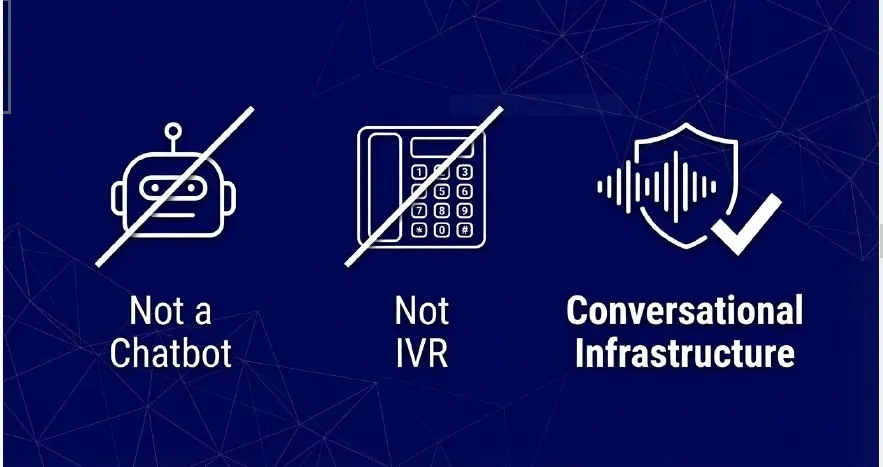
Healthcare voice AI systems, AI voice in healthcare systems, integrate with existing healthcare systems without the need for complete system replacement. Healthcare voice AI systems function in conjunction with your existing infrastructure, improving functionality without causing disruptions. The integration process for AI voice system healthcare is designed to cause minimal disruption.
Instant Call Answering
A patient dials the hospital number. The AI voice agents for healthcare respond within one ring and greet the patient professionally. There is no hold music, no waiting queue, and no frustrating delay. Each caller receives an immediate response irrespective of the call volume and time of the day through automated healthcare calls.
Understanding Caller Intent
With the help of natural language processing, the healthcare voice AI is able to identify the purpose of the call. For instance, if a person calls and says, “I want to reschedule my appointment for next Tuesday,” the voice AI in the healthcare system recognizes that the purpose of the call is rescheduling an appointment and proceeds to ask relevant questions.
Handling Routine Requests Automatically
For routine tasks such as healthcare appointment automation AI, verification of appointment times, clinic hours and directions, or general questions about procedures, voice AI for healthcare operations gets the job done instantly. No human interaction required. The patient communication AI offers immediate resolution while tracking for compliance.
Smart Escalation for Complex Cases
If the caller requires medical advice, has an emergency, or needs human judgment, AI voice assistants in the healthcare sector seamlessly transfer the call to the concerned staff members. For instance, if the caller suffers from severe chest pain, the healthcare voice AI will immediately connect the caller to medical staff.
Complete Interaction Logging
Each automated healthcare calls interaction is recorded automatically. Healthcare administrators can analyze the data related to call volumes, frequently asked questions, resolution times, and patient satisfaction. The data generated from healthcare communication automation can be used to identify areas of improvement in the operations of the healthcare organization.
What Changes After AI Voice Implementation
In healthcare organizations, the implementation of AI voice in healthcare will result in noticeable improvements within 30 days. The impact of AI voice in healthcare will be reflected in patient satisfaction, productivity of healthcare staff, efficiency of healthcare operations, and financial outcomes.
Significant Reduction in Missed Calls
Before the implementation of voice AI in the healthcare sector, hospitals could overlook 30-40% of calls during peak hours. Once voice AI agents are implemented in the healthcare sector, the number of missed calls becomes close to zero. The benefit of reducing missed calls in the healthcare sector removes the biggest source of frustration for patients.
Dramatically Faster Response Times
The average waiting time could extend up to 5-10 minutes in a busy scenario before the AI voice system in healthcare. However, after the implementation of the AI voice system in healthcare, the automated calls in healthcare are responded to within seconds, thus improving patient response time healthcare.
Lower Administrative Workload
Prior to the automation of healthcare communication, the front desk receives 200+ calls a day, which are mostly routine inquiries. With the implementation of AI voice in healthcare, the system is now able to automatically handle 70-80% of the routine calls.
Reduced Patient Complaints About Unreachability
Prior to the implementation of voice AI for healthcare operations, patient complaints include “Nobody answered my call” or “I was on hold for 15 minutes.” With the implementation of AI voice assistants for healthcare, complaints about accessibility are greatly reduced. Patients love immediate responses, and this enhances patient experience automation metrics.
Improved Overall Perception of Care Quality
Even before patients interact with a doctor, their experience begins with the initial call. When patients receive immediate responses from healthcare voice AI that are informative and seamless, patients feel cared for. This sentiment continues throughout the entire healthcare experience, improving patient satisfaction.
Why AI Voice Improves Patient Experience
The automation of patient experience is not simply defined by the quality of treatment. It is also defined by the speed of response, the clarity of information, and consistency in answers. The AI voice in healthcare addresses all three of these issues at once.
Solving the Consistency Problem
The problem with traditional healthcare communication is that the information is not consistent, and different people may provide slightly different information. The benefit of healthcare voice AI is that it provides the same information to all callers without any variation.
Enabling True 24/7 Availability
Patients can only call during office hours in traditional systems. There are communication gaps during nights, weekends, and holidays. AI voice in the healthcare sector works round the clock without any breaks. The 24/7 healthcare call answering service is a very important feature for patients who are anxious and need reassurance outside office hours.
Eliminating Frustrating Wait Times
Being put on hold when calling causes frustration and anxiety. Healthcare AI voice assistants respond to calls instantly with zero wait time, no hold music, and no frustration. The instant connection made through automated healthcare calls indicate that the concerns of patients are valued and the healthcare facility is responsive.
Providing Immediate Resolution Instead of Callbacks
“We’ll call you back” can mean waiting for hours or days in the traditional method. Most inquiries are answered in real-time using voice AI technology in healthcare operations. If escalation is required, this is automatically handled in the same call in healthcare communication automation.
Real-World Use Cases: Where AI Voice Makes the Biggest Impact
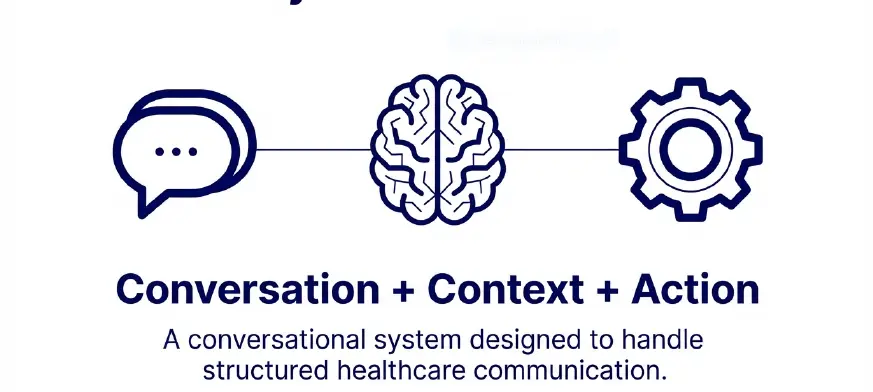
Healthcare AI voice applications are of immense use in different operational contexts. These operational contexts are the most common and successful implementations of healthcare technology solutions. Examples are taken from real healthcare organizations that have successfully implemented AI voice system healthcare.
Appointment Management
A hospital gets 500+ calls per week related to appointments, and staff members spend hours managing schedules. Healthcare appointment automation AI enables patients to say, “I want to schedule an appointment with Dr. Sharma.” The AI voice assistants for healthcare check availability, schedule appointments, and send SMS notifications. Impact: 80% of appointments are managed without human intervention using healthcare communication automation.
Post-Discharge Follow-Up
After discharge, hospitals must follow up on patient recovery, but manual calls are time-consuming. Automated healthcare calls automatically reached patients: “This is a follow-up call from City Hospital. How are you feeling?” Based on the response, patient communication AI recorded routine follow-ups, noted concerns for review by medical professionals, or scheduled follow-ups. Impact: 100% follow-up completion.
Prescription Refill Requests
Patients call for prescription refills. Staff need to confirm information, contact doctors, and follow up with pharmacies. Healthcare voice AI confirms patient identity, reviews records, and automatically generates refill requests. The healthcare operations voice AI application enhances patient compliance with medication while minimizing staff burden for general pharmaceutical requests.
General Information and Directions
New patients call asking, “Where is your clinic located?” or “What are your visiting hours?” AI voice in healthcare answers these questions instantly and sends information via SMS if necessary. AI voice in healthcare automation of communication in healthcare enables the front desk to concentrate on difficult questions.
Emergency Triage and Routing
For callers with urgent medical issues, there is a need for immediate routing to the relevant medical care. AI voice assistants for the healthcare industry rapidly evaluate the urgency of the medical issue through structured calls and immediately route critical cases to emergency staff. The application of medical communication platforms enhances emergency response and patient outcomes due to faster intervention.
Why AI Voice Is Becoming Core Healthcare Infrastructure
The expectations of the healthcare industry have undergone a paradigm shift. Patients now compare the customer service AI of the healthcare industry with banks that offer immediate service, airlines that provide real-time updates, and digital platforms that are available 24/7. The voice of AI in the healthcare industry is shifting from innovation to healthcare technology solutions.
The Evolution from Innovation to Standard Practice
Phase 1 (Innovation, 2020-2022): Initial healthcare providers explored AI voice system healthcare as a competitive tool. Phase 2 (Adoption, 2023-2024): Hospitals started adopting healthcare communication automation to address operational issues. Phase 3 (Infrastructure, 2025 onwards): AI voice in healthcare is becoming the norm, where patients demand immediate response.
Why Early Adoption Matters
Healthcare organizations will be rated on accessibility and response time. Voice AI for healthcare operations is shifting from a “nice to have” to a “must have” infrastructure. Pioneers of AI voice agents for healthcare operations harness efficiency and trust and create competitive advantages through healthcare digital transformation.
The Competitive Disadvantage of Delayed Adoption
Healthcare facilities that do not have healthcare voice AI are facing more challenges. In patient reviews, there is poor accessibility, and burnout among staff is increased because of communication overload. With more competitors using AI voice in the healthcare sector, the difference between adopters and non-adopters is increasing, and it is becoming more expensive to delay adoption.
Addressing Common Concerns About AI Voice in Healthcare
Healthcare administrators may have some valid questions about the implementation of AI voice in healthcare. It is important to address these questions in an open manner to help organizations make informed decisions about the automation of healthcare communication. The following questions are the most commonly asked questions by healthcare administrators interested in adopting AI voice in healthcare.
Will Patients Accept Talking to AI?
When done correctly, most patients will not even notice or care whether they are speaking to an AI or a human for their routine inquiries. What patients care about is getting their answers quickly and having a smooth experience. If a healthcare voice AI system can provide that, then acceptance will be high. Patient satisfaction improvement will often be seen to increase after implementation.
What About Complex or Emotional Situations?
The AI voice in the healthcare industry is not intended to substitute human empathy in dealing with complex situations. Complex situations are referred to human staff immediately. The AI voice agents in the healthcare industry are responsible for routine tasks, while human staff handle complex cases. This is actually an improvement in human interaction since the productivity of healthcare staff will increase.
Is AI Voice Secure for Healthcare?
Healthcare voice AI systems are designed with data encryption, HIPAA compliance (in the US), privacy protection, and secure integration with existing healthcare communication platforms. Security is an essential requirement for AI voice systems in healthcare. Legitimate vendors are subject to periodic security audits and maintain compliance certifications.
How Long Does Implementation Take?
Most healthcare organizations can implement AI voice in healthcare within 4-8 weeks, depending on the complexity of the workflow. The process of automating communication in healthcare involves workflow mapping, system integration, testing, staff training, and a phased implementation plan to cause minimal disruption.
What About System Reliability?
The contemporary AI voice assistants for healthcare platforms are designed with high availability and redundancy. They are designed to run with 99.9%+ availability and automatic failover systems. In cases where technical problems arise, the automated healthcare calls can automatically switch to human representatives.
Who AI Voice in Healthcare Is For
Relevance of AI voice in the healthcare sector applies to anyone involved in the automation of patient experience, operations, communication, efficiency, or scale. If you are affected by communication delays in your outcomes, then healthcare voice AI applies to you as a positive force. The healthcare technology solutions are for large healthcare systems as well as smaller practices.
Healthcare Organizations Ideal for AI Voice
Hospital communication systems with high call volumes can immediately benefit from the implementation of AI voice in healthcare. Outpatient clinics with complex scheduling systems can greatly benefit from the improvements in healthcare operational efficiency. Specialized centers with complex scheduling requirements can alleviate coordination problems with healthcare appointment automation AI.
Healthcare Roles That Benefit Most
Hospital administrators benefit from operational efficiency in the healthcare industry. Patient experience managers notice an improvement in patient satisfaction scores. Front desk managers experience a decrease in employee burnout. Clinical directors benefit from increased productivity of healthcare staff. CFOs measure the ROI from reduced missed calls in healthcare.
Signs Your Organization Is Ready
Your organization is ready to adopt voice AI for healthcare operations if you notice high call volumes with many missed calls, patient complaints regarding accessibility, employees spending too much time on answering repetitive calls, challenges in ensuring 24/7 healthcare call answering, or scaling patient communication AI with the growing number of patients.
The Future of Healthcare Communication
The digital transformation of the healthcare industry is changing, and technology is not replacing the human touch—it is facilitating it. When employees are liberated from mundane tasks by the automation of healthcare communication, they can dedicate more time to patients, complex problem-solving, high-quality care, and less burnout.
Building Systems That Scale With Care
AI voice in the healthcare industry makes it possible to develop solutions that can grow with demand, react in an instant, and stay consistent—to allow humans to focus on caring for others. Those organizations that adopt healthcare technology solutions will see improvements in patient satisfaction improvement, lower operational costs, better staff, improved reputation, and growth without breaking.
The Cost of Resistance
Those organizations fighting the digital transformation of the healthcare industry will find themselves competing with antiquated technology in a world demanding instant, always-on communication. The expectations of patients will not diminish. Call volumes will not decrease. The disparity between what patients want and what traditional hospital communication systems offer will only continue to grow.
AI Voice as Enabler of Human Excellence
The end goal of AI voice in the healthcare industry is not to replace healthcare professionals but to extend their reach. With the ability to perform routine communication tasks automatically, AI voice assistants in the healthcare industry enable healthcare professionals to dedicate their time solely to cases that require human intervention.
See AI Voice in Action
The only way to fully understand the AI voice in the healthcare industry is to witness the technology in action. While learning about the capabilities of healthcare communication automation is helpful, experiencing the healthcare voice AI technology firsthand is the best way to gain understanding.
What a Demo Includes
Schedule a healthcare AI voice demo to view live call handling demos of how AI voice agents for healthcare can handle patient calls. View real workflow integrations with your current appointment systems, EMR platforms, and medical communication platforms. View real healthcare operations use cases of AI voice solutions for healthcare that apply to your organization.
Why Now Is the Time
The use of AI voice in the healthcare sector is not the future but the present. There are hundreds of healthcare facilities around the world using healthcare voice AI to enhance patient experience automation and healthcare operational efficiency. The question is not whether to implement voice AI in the healthcare sector but when. Each day without an AI voice system in healthcare is a missed opportunity to improve patient satisfaction.
Conclusion: Healthcare Communication Reimagined
For healthcare leaders, operators, and decision-makers, the question is no longer “Should we implement AI voice in healthcare?” The question is “How quickly can we deploy healthcare communication automation to meet rising patient expectations and demands?”
The future of healthcare communication is now. Healthcare organizations that adopt AI voice in healthcare today will be the leaders of tomorrow. Those that wait will be playing catch-up for years to come.
Schedule your free healthcare AI voice demo today and see how AI voice agents for healthcare can revolutionize patient communication, optimize healthcare operations, and provide the instant, consistent, and compassionate service that your patients demand.
Frequently Asked Questions (Faqs)
1. What is AI voice in healthcare?
AI voice in healthcare is a conversational system that automatically handles patient phone calls using natural language understanding. Unlike traditional IVR menus, healthcare voice AI answers instantly, understands caller intent, performs actions like booking appointments, and escalates complex cases to human staff. AI voice agents for healthcare operate 24/7, handling routine queries so healthcare professionals can focus on patient care requiring human judgment and medical expertise.
2. Can AI voice replace healthcare staff?
No. AI voice in healthcare assists staff, not replaces them. Healthcare communication automation handles repetitive tasks like appointment confirmations, directions, and general information. Human staff focus on medical advice, emergencies, complex cases, and emotional support. This division improves healthcare operational efficiency while allowing professionals to spend time on meaningful patient interactions requiring their expertise, empathy, and clinical decision-making skills.
3. Is AI voice secure and compliant for healthcare use?
Yes. Healthcare voice AI systems include data encryption, HIPAA compliance, privacy protection protocols, and secure integration with existing hospital systems. AI voice agents for healthcare providers maintain compliance certifications, conduct regular security audits, implement role-based access controls, and ensure compliance with regional regulations like GDPR. Security is foundational to AI voice system healthcare, not an afterthought.
4. How fast can AI voice be implemented in our healthcare facility?
Most healthcare organizations deploy AI voice in healthcare within 4-8 weeks. The healthcare communication automation implementation includes workflow mapping, system integration with EMR/appointment systems, testing, staff training, and gradual rollout. Many facilities start with pilot programs handling specific call types before full deployment. Timeline depends on workflow complexity, integration requirements, and customization needs for your voice AI for healthcare operations.
5. Does AI voice work after hours and on weekends?
Yes. AI voice in healthcare provides true 24/7 healthcare call answering without breaks, holidays, or downtime. Automated healthcare calls are handled instantly at any time—nights, weekends, holidays. This benefits anxious patients needing after-hours reassurance, working patients calling evenings, and international patients in different time zones. Healthcare voice AI handles unlimited simultaneous calls, ensuring no missed calls regardless of volume or time.