
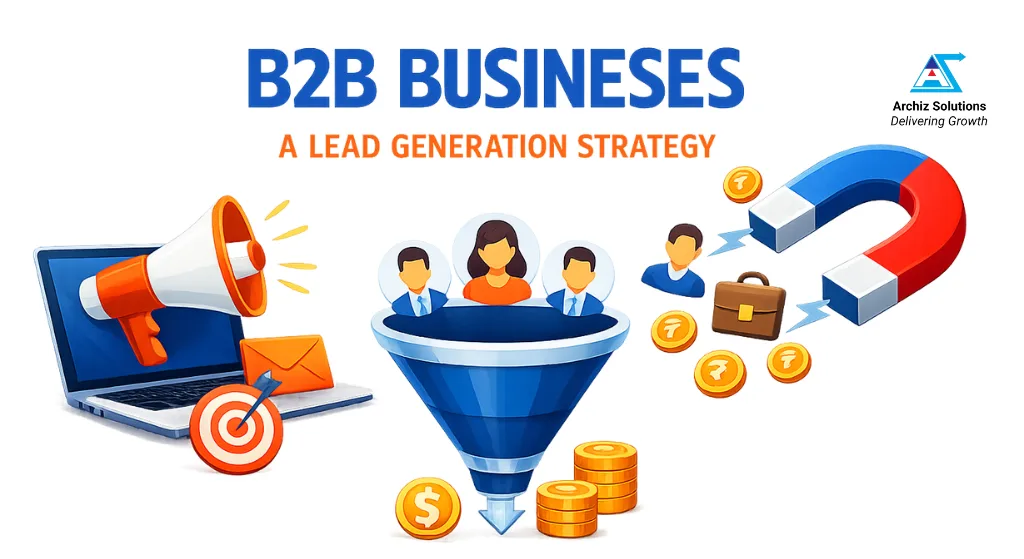
Why B2B Businesses Need a Lead Generation Strategy
In today’s competitive digital marketplace, Lead Generation is no longer optional for B2B businesses—it is essential for sustainable growth. With longer sales cycles, multiple decision-makers, and increasing competition, B2B companies must adopt a structured lead generation strategy to attract, nurture, and convert high-quality prospects.
Without a clear lead generation and lead management process, businesses risk losing valuable opportunities, wasting marketing budgets, and slowing revenue growth.
This article explains why B2B businesses need a Lead Generation strategy, how it supports lead management, and how it drives consistent sales performance.
What Is Lead Generation in B2B Business?
Lead Generation is the process of identifying, attracting, and capturing potential customers who show interest in your products or services. In B2B, lead generation focuses on targeting decision-makers and businesses rather than individual consumers.
A strong lead generation strategy works closely with lead management systems to ensure that leads are properly tracked, qualified, nurtured, and converted into customers.

Why Lead Generation Is Critical for B2B Businesses
1. Lead Generation Builds a Predictable Sales Pipeline
For B2B businesses, sales cycles are long and complex. A well-defined lead generation strategy ensures a continuous flow of qualified leads into your sales funnel.
With proper lead management, businesses can:
- Track leads at every stage.
- Forecast revenue accurately.
- Avoid gaps in the sales pipeline.
Consistent lead generation creates predictable and scalable growth.
2. Lead Generation Helps Target the Right Audience
Not every prospect is a good fit. Lead generation allows B2B businesses to focus on high-intent prospects using data-driven targeting.
By integrating lead management tools, companies can:
- Segment leads based on industry, company size, or behavior.
- Prioritize sales-ready leads.
- Reduce time spent on low-quality prospects.
This improves conversion rates and sales efficiency.
3. Strong Lead Management Improves Conversion Rates
Capturing leads is only the first step. Without proper lead management, leads often go cold.
A strong lead generation strategy combined with lead management software enables:
- Automated follow-ups.
- Lead scoring based on engagement.
- Personalized communication across channels.
This ensures no lead is missed and increases the chances of conversion.
4. Lead Generation Aligns Sales and Marketing Teams
One of the biggest challenges in B2B businesses is misalignment between sales and marketing.
A unified lead generation and lead management approach:
- Defines what qualifies as a sales-ready lead.
- Improves communication between teams.
- Ensures smoother lead handoff.
This alignment leads to faster deal closures and higher ROI.
5. Lead Generation Maximizes Marketing ROI
Without a proper lead generation strategy, marketing efforts often fail to deliver measurable results.
Using analytics-driven lead generation and lead management, B2B companies can:
- Track which channels generate quality leads.
- Optimize campaigns for better performance.
- Reduce wasted ad spend.
This helps businesses get more value from their marketing investments.
Key Components of an Effective B2B Lead Generation Strategy Lead Capture
Collect leads from websites, landing pages, social media, ads, and events.
Lead Management System
Use CRM or lead management software to store, track, and manage all leads in one place.
Lead Nurturing
Automate emails, follow-ups, and content delivery based on buyer behavior.
Lead Scoring
Rank leads based on engagement, intent, and readiness to buy.
Analytics & Reporting
Measure lead generation performance and optimize continuously.
Conclusion: Lead Generation Is the Backbone of B2B Success
In a competitive B2B environment, a strong Lead Generation strategy is essential for growth, efficiency, and profitability. When combined with effective lead management, it helps businesses attract the right prospects, nurture relationships, and convert leads into long-term customers.
B2B companies that invest in structured lead generation and lead management systems gain a clear competitive advantage and achieve predictable revenue growth.
Frequently Asked Questions (Faqs)
Q1.Why is Lead Generation important for B2B businesses?
Lead Generation helps B2B businesses attract qualified prospects, build a sales pipeline, and drive consistent revenue growth.
Q2.What is the role of Lead Management in Lead Generation?
Lead management ensures that generated leads are tracked, nurtured, prioritized, and converted efficiently.
Q3.How does Lead Generation improve sales performance?
A strong lead generation strategy provides sales teams with high-quality leads, reducing effort and increasing close rates.
Q4.Can small B2B businesses benefit from Lead Generation?
Yes, even small B2B businesses can use lead generation and lead management to compete effectively and scale faster.
very well written thanx for sharing the information