
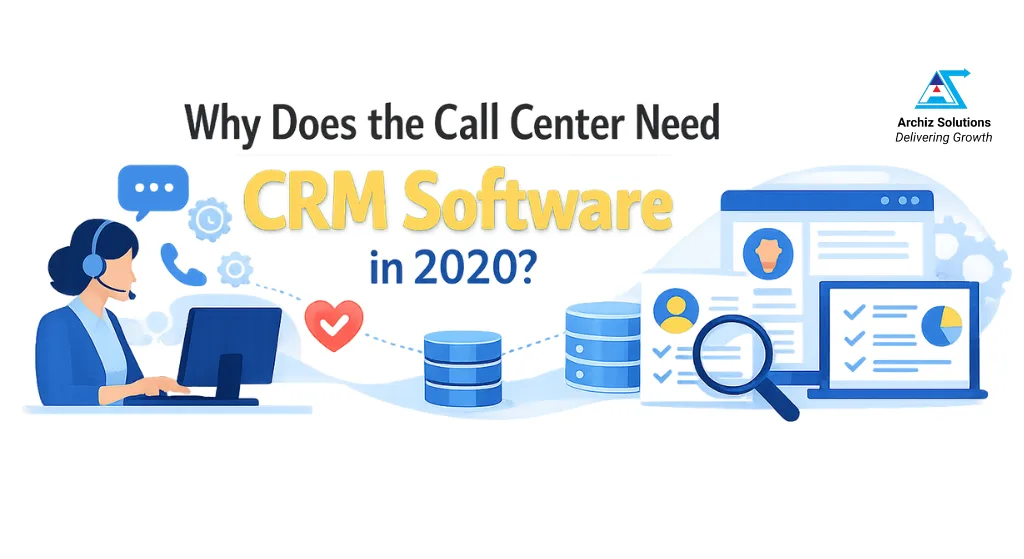
Why Does the Call Center Need CRM Software in 2026?
The year 2026 marked a major shift in how businesses communicate with customers. With remote work, rising customer expectations, and digital-first interactions, every Call Center needed a smarter way to manage customer communication. This is where CRM software became essential for call center operations.
A modern Call Center without CRM software struggles with scattered data, missed follow-ups, poor customer experience, and low agent productivity. CRM software helps call centers stay organised, efficient, and customer-centric.
What Is CRM Software for a Call Center?
CRM software for a Call Center is a system that centralises customer data, call history, tickets, and interactions in one platform. It enables agents to handle calls faster, personalise conversations, and resolve issues efficiently.
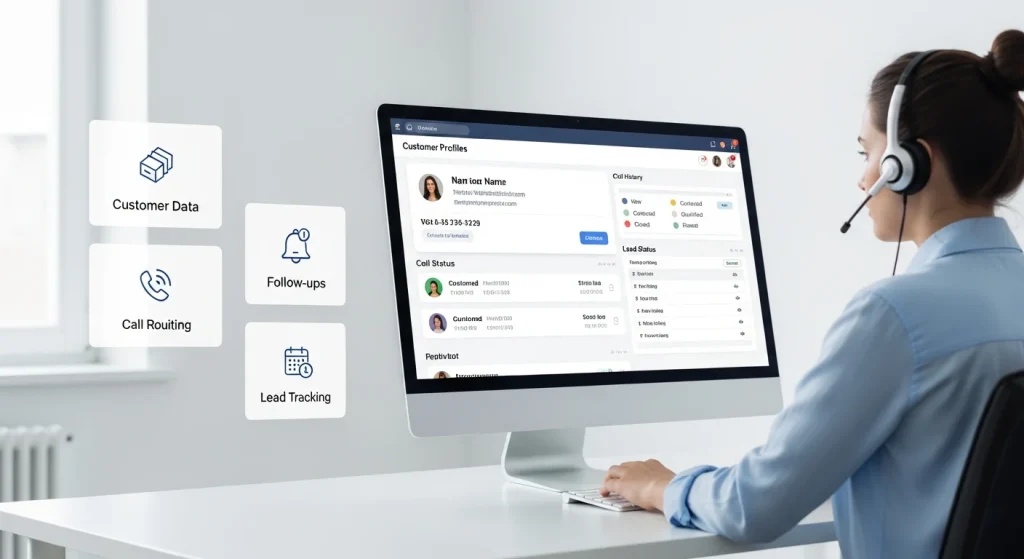
Why CRM Software Is Important for a Call Center in 2020
1. Centralised Customer Data
A Call Center handles thousands of customer interactions every day, making efficient customer management essential. A Customer Relationship Management (CRM) System stores customer profiles, call histories, complaints, inquiries, and purchase records in one centralized platform, allowing agents to access accurate information instantly. This helps improve response time, enhance customer support quality, deliver personalized service, and increase overall customer satisfaction.
2. Improved Customer Experience
A Customer Relationship Management (CRM) System empowers a Call Center to deliver personalized customer support by providing agents with complete access to customer profiles, previous interactions, support history, and past issues. This enables agents to understand customer needs quickly, resolve problems efficiently, and avoid asking repetitive questions, resulting in a smoother customer experience and higher customer satisfaction.
3. Efficient Call Handling and Routing
CRM-integrated call routing helps a Call Center automatically direct incoming calls to the most suitable agent based on customer data, inquiry type, or interaction history. This reduces customer wait times, improves first-call resolution rates, enhances service efficiency, and delivers a faster and more personalized customer support experience.
4. Higher Agent Productivity
CRM automation helps a Call Center eliminate repetitive manual tasks such as call logging, data entry, follow-up scheduling, and customer record updates. By automating these routine processes, agents can focus more on customer interactions and issue resolution. This improves operational efficiency, increases productivity, and enables the call center to handle a higher volume of calls without increasing workforce requirements.
5. Better Lead and Follow-Up Management
For sales-focused Call Center operations, Customer Relationship Management (CRM) System helps businesses track leads, automate follow-ups, manage customer interactions, and monitor the entire sales pipeline efficiently. This improves lead management, increases conversion opportunities, enhances sales productivity, and ensures that no potential customer opportunity is missed.
6. Real-Time Monitoring and Reporting
Managers can monitor Call Center performance in real time using advanced Customer Relationship Management (CRM) System dashboards and analytics tools. These dashboards help businesses track key performance indicators (KPIs) such as call volume, agent productivity, response time, first-call resolution, and customer satisfaction levels. Real-time insights enable managers to improve operational efficiency, optimize team performance, and deliver a better customer support experience.
7. Support for Remote Call Centers
In 2026, remote work became a critical part of modern business operations. Cloud-based Customer Relationship Management (CRM) System solutions enable a Call Center to operate efficiently with remote agents by providing secure access to customer data, communication tools, and workflows from any location. This ensures uninterrupted customer service, improves team collaboration, enhances operational flexibility, and supports seamless remote call center management.
Conclusion
In 2026, Customer Relationship Management (CRM) System became a necessity rather than an option for every Call Center. CRM software helps businesses deliver personalized customer experiences, improve agent productivity, streamline communication, and stay competitive in a rapidly evolving customer service environment.
A CRM-enabled call center is more organized, efficient, scalable, and better prepared for long-term business growth. By centralizing customer data, automating workflows, and improving service quality, CRM solutions help call centers enhance customer satisfaction while optimizing overall operational performance.
Frequently Asked Questions (Faqs)
Q1.Why does a Call Center need CRM software?
A Call Center needs CRM software to manage customer interactions, improve service quality, and increase agent efficiency.
Q2.How does CRM software improve Call Center performance?
CRM software provides real-time data, automation, and insights that help a Call Center reduce call handling time and improve customer satisfaction.
Q3.Is CRM software suitable for small Call Centers?
Yes, cloud-based CRM solutions are affordable and scalable, making them ideal for small and medium-sized Call Centers.
Q4.Does CRM software integrate with calling systems?
Yes, CRM software integrates with VoIP, IVR, ticketing systems, and analytics tools used by a Call Center.
Call center job vacancies have grown in recent years. Most of the graduate and +2 passed students are opting to make it a career.
There are plenty of job vacancies for different professions in call-center.
You can find the list of Call center job vacancies in Noida at:
https://receptix.com/in/call-center-jobs-in-noida