
Introduction : Big Data CRM Analytics Tool
Customers today leave digital footprints everywhere—websites, apps, emails, social media, and support channels. The challenge for businesses is not lack of data, but making sense of it. This is where a Big Data CRM Analytics Tool becomes essential.
By combining customer relationship management with big data analytics, organizations can understand what customers want, predict behavior, and deliver personalized experiences at scale.
What Is Big Data CRM Analytics Tool in CRM?
Big Data in CRM refers to collecting and analyzing large volumes of structured and unstructured customer data from multiple sources. This includes:
- Purchase history.
- Website interactions.
- Customer support conversations.
- Social media engagement.
- Email and campaign responses.
A Big Data CRM Analytics Tool processes this information in real time to generate actionable insights.
Why Traditional CRM Is No Longer Enough
Traditional CRMs store customer data but often fail to analyze it deeply. They answer who the customer is, but not why they behave a certain way.
With big data analytics, CRM systems can:
- Identify behavior patterns.
- Predict customer needs.
- Detect churn risks early.
- Optimize customer journeys.
This shift turns CRM from a data repository into a decision-making engine.
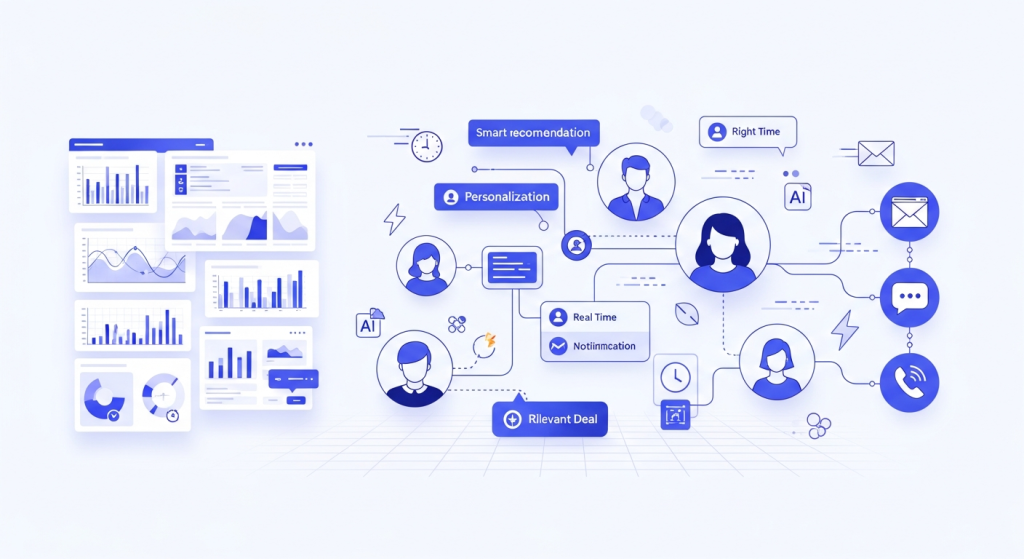
What Your Customers Really Want
1. Personalization, Not Generic Messaging
Customers expect brands to understand their preferences. A Big Data CRM Analytics Tool enables hyper-personalized communication based on real behavior, not assumptions.
2. Faster Responses
Customers value speed. By analyzing historical interactions and intent signals, CRM analytics tools help teams respond faster and more accurately.
3. Consistent Experience Across Channels
Whether customers interact via email, website, or support calls, they expect continuity. Big data-powered CRM systems unify data across channels for a seamless experience.
4. Relevant Offers at the Right Time
Analytics-driven CRM tools predict buying intent and recommend relevant offers, increasing conversion rates without aggressive selling.
How Big Data CRM Analytics Tools Work
A modern Big Data CRM Analytics Tool typically includes:
- Data integration from multiple platforms.
- Real-time analytics and dashboards.
- Customer segmentation using AI models.
- Predictive analytics for behavior forecasting.
- Automated insights for sales and marketing teams.
These capabilities help businesses move from reactive to proactive engagement.
Big Data CRM Analytics Tool = Smarter Decisions
When big data meets CRM, decisions are no longer based on intuition. Businesses gain a 360-degree customer view backed by real data, enabling smarter strategies and better customer experiences.
A well-implemented Big Data CRM Analytics Tool helps organizations anticipate customer needs instead of reacting after problems occur.
Final Thoughts : Big Data CRM Analytics Tool
Understanding what customers want is no longer optional—it’s a survival requirement. A Big Data CRM Analytics Tool empowers businesses to listen, learn, and act on customer data in real time.
For organizations looking to scale personalization, efficiency, and customer satisfaction, investing in CRM analytics powered by big data is a strategic move, not just a technology upgrade.
Frequently Asked Questions (Faqs)
Q1.What is a Big Data CRM Analytics Tool?
A Big Data CRM Analytics Tool combines CRM systems with big data technologies to analyze customer behavior, preferences, and interactions at scale.
Q2.How does big data improve CRM performance?
Big data enhances CRM by providing deeper insights, predictive analytics, and real-time decision-making, helping businesses understand customers better.
Q3.Can small businesses use Big Data CRM Analytics Tools?
Yes. Many modern CRM analytics platforms are scalable and affordable, making them suitable for small and mid-sized businesses.
Q4.What types of data does CRM analytics analyze?
CRM analytics tools analyze transactional data, behavioral data, communication history, web activity, and customer feedback.